Introduction
A home lift is becoming an essential feature in modern residential buildings. It provides convenience, improves accessibility for elderly family members, supports wheelchair users, and increases property value. As more homeowners choose multi-storey houses, planning for a home lift during the construction stage has become a smart investment.
Installing a lift after the house is completed often requires structural modifications, demolition work, and additional expenses. Planning the lift during construction allows architects and engineers to allocate the necessary space for the lift shaft, pit, electrical systems, and maintenance access. This approach reduces future costs and ensures smooth installation.
Importance of Planning a Home Lift During Construction
Key Benefits
- Reduces future renovation costs.
- Eliminates the need for major structural modifications.
- Improves accessibility for all family members.
- Increases the resale value of the property.
- Provides better space utilization.
- Simplifies lift installation.
- Supports future mobility needs.
Proper planning also ensures compliance with safety requirements and building standards.
Lift Pit Requirements
The lift pit is the lowest section of the lift shaft located below the ground floor. It provides space for safety equipment and allows the lift car to operate safely.
Recommended Pit Depth
- 550 mm (21.7 inches)
Construction Requirements
- Construct the pit using reinforced cement concrete (RCC).
- Apply waterproofing treatment to walls and floor.
- Provide drainage arrangements where required.
- Prevent water seepage and moisture accumulation.
- Ensure easy access for maintenance.
A properly designed pit improves safety and extends the life of lift equipment.
Lift Car Dimensions
The lift car should provide comfortable space for passengers and wheelchair users.
Recommended Cabin Dimensions
- Width: 1000 mm (39.4 inches)
- Depth: 1150 mm (45.3 inches)
- Height: 2000 mm (78.7 inches)
- Minimum Width: 900 mm (35.4 inches)
These dimensions are generally suitable for residential applications and wheelchair accessibility.
Lift Shaft Requirements
The lift shaft, also known as the hoistway, is the vertical enclosure through which the lift travels.
Recommended Shaft Dimensions
- Width: 1500 mm (59.1 inches)
- Depth: 1450 mm (57.1 inches)
Construction Guidelines
- Use strong RCC walls and structural members.
- Ensure walls are vertical and accurately aligned.
- Provide sufficient space for guide rails.
- Prevent water leakage into the shaft.
- Include adequate lighting and ventilation.
A properly constructed shaft contributes to safe and smooth lift operation.
Lift Door Requirements
The lift entrance should allow easy and safe access for users.
Recommended Door Dimensions
- Width: 800 mm (31.5 inches)
- Height: 1900 mm (74.8 inches)
Advantages
- Easier wheelchair access.
- Improved convenience for elderly residents.
- Better movement of luggage and household items.
- Enhanced passenger comfort.
Landing doors should include safety interlocks to prevent accidental opening.
Overhead Clearance Requirements
Overhead clearance is the space above the highest landing level of the lift shaft.
Recommended Dimensions
- Minimum Overhead Clearance: 2400 mm (94.5 inches)
- Top Car Clearance: 225 mm (8.9 inches)
Adequate overhead clearance is essential for safe operation, maintenance, and installation of lift components.
Structural Requirements
The building structure must be capable of supporting the lift system and all associated loads.
Foundation Requirements
- Support lift car weight.
- Support passenger loads.
- Handle dynamic operating forces.
- Accommodate guide rail loads.
Structural Components
- RCC columns.
- Reinforced beams.
- Adequate wall thickness.
- Proper concrete strength.
A qualified structural engineer should verify all lift-related loads before construction begins.
Electrical Requirements
A dedicated electrical system should be planned for the home lift.
Electrical Provisions
- Separate power supply connection.
- Proper earthing system.
- Main isolation switch.
- Circuit breakers and protection devices.
- Emergency backup power if required.
- Electrical conduits installed during construction.
Proper electrical planning improves reliability, safety, and maintenance efficiency.
Essential Safety Features
Every home lift should include modern safety systems to protect passengers.
Terminal Limit Switches
- Automatically stop the lift at upper and lower travel limits.
Door Interlocks
- Prevent doors from opening when the lift is not positioned at the landing.
Emergency Alarm
- Allows passengers to request assistance during emergencies.
Emergency Lighting
- Provides visibility during power failures.
Overload Protection
- Prevents operation when the rated load is exceeded.
Door Safety Sensors
- Detect obstacles and prevent accidental door closure.
These features are essential for reliable and secure operation.
Accessibility Features
Modern home lifts should accommodate users of all ages and abilities.
Recommended Accessibility Features
- Wheelchair-friendly cabin dimensions.
- Low-height control panels.
- Braille buttons.
- Voice announcements.
- Handrails inside the cabin.
- Non-slip flooring.
- Easy-to-read displays.
Machine Room and Maintenance Access
Depending on the lift type, a machine room may be required.
Important Requirements
- Adequate maintenance space.
- Proper ventilation.
- Safe technician access.
- Sufficient lighting.
- Compliance with manufacturer recommendations.
Waterproofing and Drainage
Water entering the lift pit can damage equipment and increase maintenance costs.
Best Practices
- Apply waterproof coatings.
- Seal construction joints.
- Install drainage arrangements.
- Prevent rainwater entry.
- Conduct waterproofing inspections before lift installation.
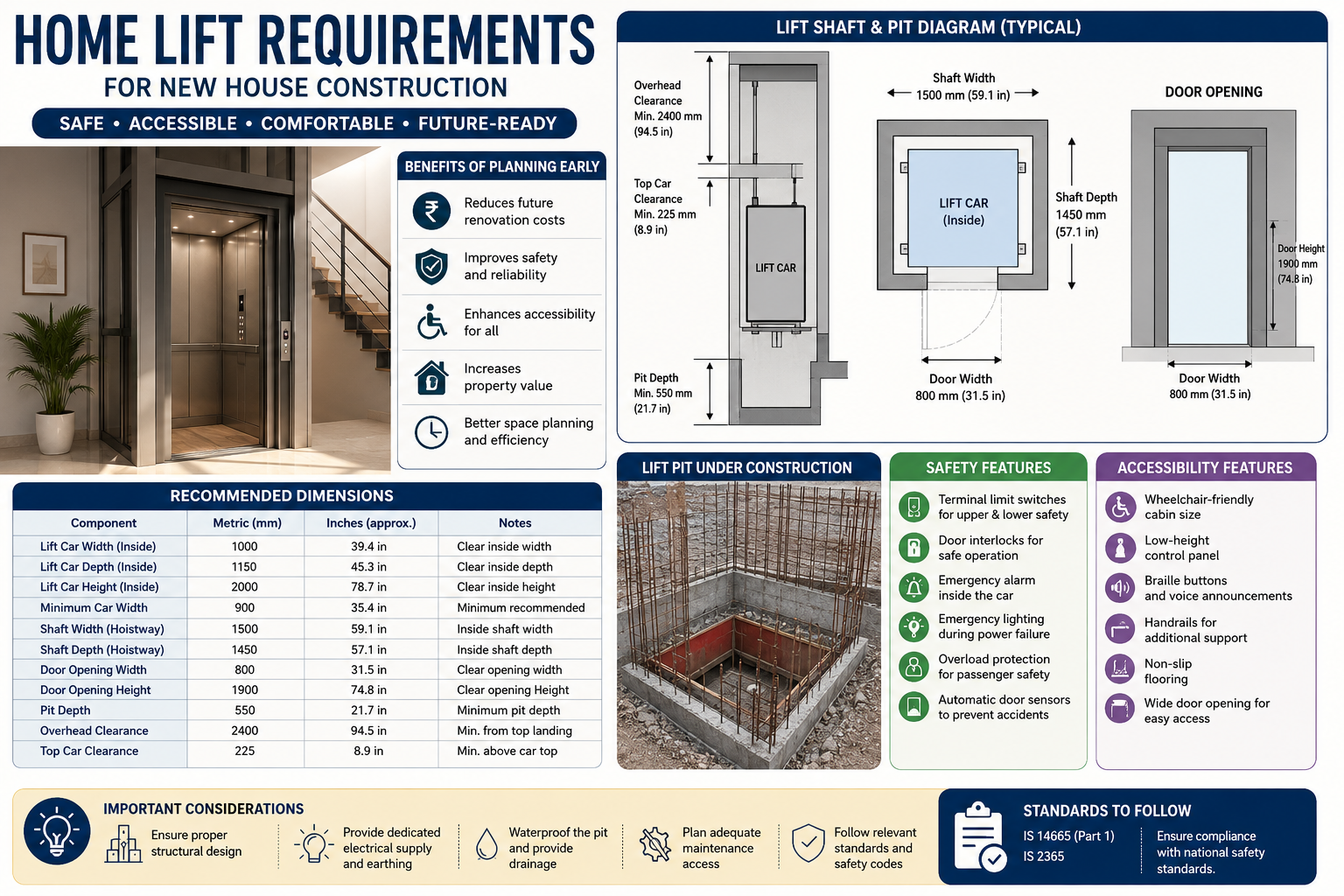
Recommended Home Lift Dimensions Summary
Lift Car
- Width: 1000 mm (39.4 inches)
- Depth: 1150 mm (45.3 inches)
- Height: 2000 mm (78.7 inches)
Lift Shaft
- Width: 1500 mm (59.1 inches)
- Depth: 1450 mm (57.1 inches)
Door Opening
- Width: 800 mm (31.5 inches)
- Height: 1900 mm (74.8 inches)
Other Important Dimensions
- Pit Depth: 550 mm (21.7 inches)
- Overhead Clearance: 2400 mm (94.5 inches)
- Top Car Clearance: 225 mm (8.9 inches)
Conclusion
Installing a home lift during the construction stage is a practical and future-ready investment. Proper planning of the lift pit, shaft dimensions, cabin size, entrance width, structural supports, electrical systems, and safety features ensures smooth and reliable operation. By following recommended dimensions and construction guidelines, homeowners can create a safe, comfortable, accessible, and future-ready home while increasing the property's long-term value.